

Keep your business running smoothly with our working capital loans. Whether you need to pay suppliers, manage inventory, or bridge seasonal gaps, we provide quick access to funds that keep your operations flowing.

Note:(Fields marked with * are required)
Note:(Fields marked with * are required)
Combine your loan with these subsidies to reduce costs and maximize benefits

15% capital subsidy on technology upgradation

Collateral-free facility

15-25% on machinery cost

Additional subsidies for quality compliance
Find answers to commonly asked questions about our working capital loan offerings
A loan to fund your day-to-day business expenses- buying raw material, paying salaries, managing inventory, and keeping operations running smoothly. Unlike a term loan (for a specific asset), working capital keeps your business cash flow healthy through its regular operating cycle.
Three main types: (a) Cash Credit (CC)- draw and repay as needed, interest only on amount used; (b) Overdraft (OD)- similar, linked to your current account; (c) Short-term working capital loan- lump sum for a fixed period. LoanVittus helps identify which type suits your business cycle and cash flow pattern.
Banks look at your sales, inventory, how fast customers pay you, and how fast you pay suppliers. They use methods like MPBF (Maximum Permissible Bank Finance)- typically 25% of projected turnover for loans up to ₹5 Crore, or detailed assessment for larger facilities. This is calculated through your CMA data. LoanVittus generates CMA in standard banking format.
Not always. Several options exist for collateral-free lending: CGTMSE-backed loans (up to ₹5 Crore without collateral, subject to eligibility), MUDRA loans (collateral-free by design), and select NBFC and private bank products based on cash flow and credit profile. For larger loan amounts or certain bank products, collateral or third-party guarantee may be required. LoanVittus identifies the most suitable options for your situation.
CMA is a standard financial format that banks use to assess your working capital need. It shows your current and projected financials in the way banks want to see them including Balance Sheet, P&L, Fund Flow, and MPBF calculation. Required for almost all CC/OD proposals and annual renewals. Without a well-prepared CMA, your limit will be sub-optimal.
Banks deduct your expected contribution (usually 25%), exclude non-business assets, and calculate based on your actual business cycle not what you think you need. If your receivables are fast or inventory is lean, the assessed need is lower. High creditor days also reduce the gap. LoanVittus helps optimise your CMA to get the maximum justifiable limit.
CMA data (LoanVittus generates this), last 2-3 years financials, 12 months bank statements, GST returns, latest stock statement, debtor creditor ageing details, PAN, Aadhaar, and business registration. For CC facilities, banks may also require a stock hypothecation agreement.
Common reasons: mismatch between your CMA projections and actual financials, slow collections from customers (high debtor days), weak current ratio (banks prefer 1.33+), frequent cheque bounces, declining sales trends, or adverse stock audit findings. Banks also check account conduct over-utilisation of existing limits is a red flag. LoanVittus addresses these before you apply.
If you have a CC account, the bank sends auditors (quarterly/half-yearly) to physically check your inventory. Significant discrepancies between what you reported and what’s actually there can reduce your drawing power, trigger additional margin demands, or in extreme cases, lead to facility recall. Accurate stock records are critical.
Yes, this is very common. Your DPR covers the term loan and CMA covers working capital. Banks assess both as a combined proposal. LoanVittus generates combined DPR+CMA, ensuring repayment analysis accounts for both facilities together.
Indicative ranges: CC: 8.5%-15% p.a.; OD: 9-14% p.a.; Short-term WC: 9%-16% p.a. Interest on CC/OD is charged only on the amount you actually use, not the full limit. Rates may vary based on borrower profile, lender policy, and economic conditions. LoanVittus does not determine rates.
We generate bank-standard CMA data, analyse your business cycle to justify the right limit, help you explore suitable lender options., prepare renewal documentation, and generate combined DPR+CMA for multi-facility proposals. We assist in organising financial information we do not make lending decisions.
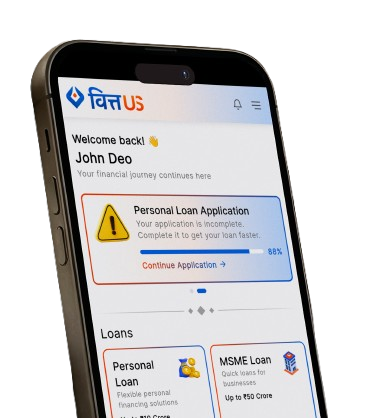
CC limits, OD facilities, right lender matching.
Your business doesn’t stop your funding shouldn’t either.
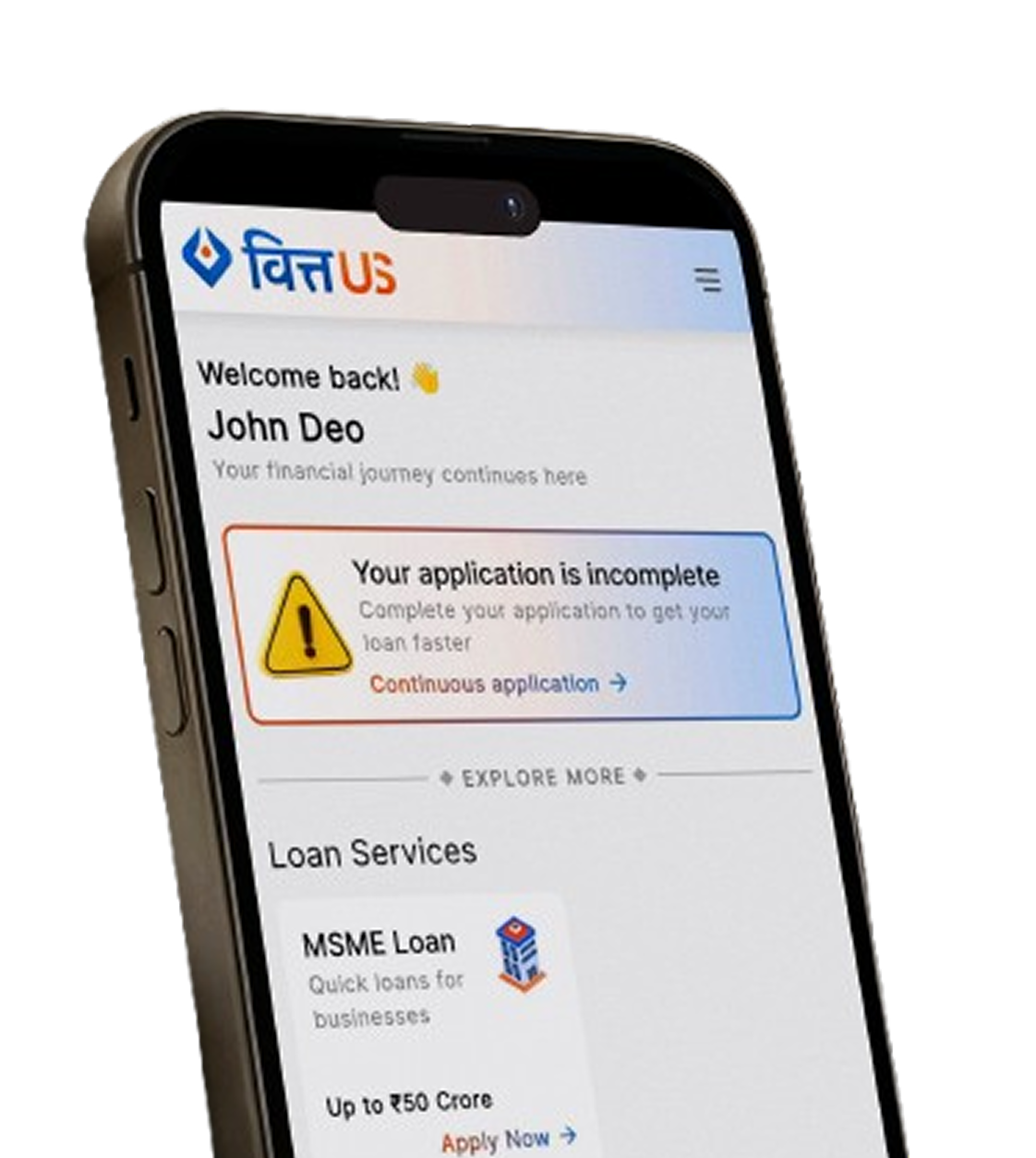
CC limits, OD facilities, right lender matching. Your business doesn’t stop – your funding shouldn’t either.